Damp is the single biggest driver of mould, and the most expensive mistake people make is treating the wrong type. The three behave differently, appear in different places, and need completely different solutions. Here’s how to read the signs.
Condensation
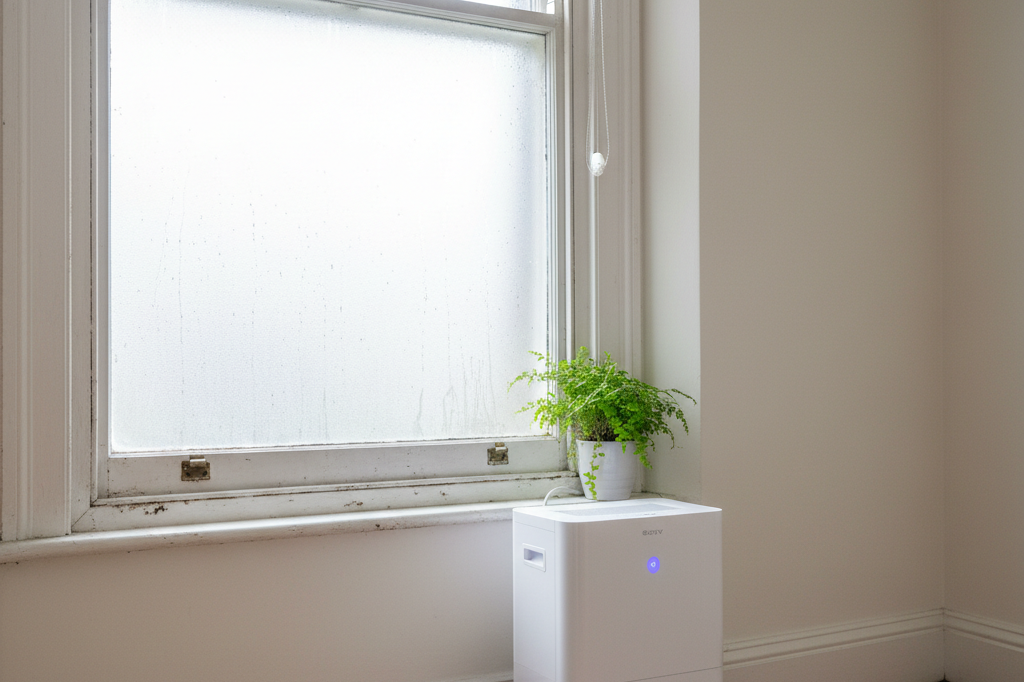
The most common by far. Condensation happens when warm, humid indoor air meets a cold surface and turns to water.
- Where: cold external corners, high up on walls, around windows, behind furniture, and in bathrooms and kitchens.
- When: worst in winter and first thing in the morning.
- Tell-tale signs: water droplets on windows, a musty smell, and black mould in corners rather than spreading from one wet point.
The fix is about ventilation and humidity, not waterproofing — see damp & condensation control.
Penetrating damp
Water getting in from outside through a defect in the building.
- Where: a localised patch, often mid-wall, tied to something external — a cracked render, failed pointing, a blocked or leaking gutter, or a roof problem.
- When: appears or worsens after rain.
- Tell-tale signs: a defined damp patch that doesn’t follow the “cold corner” pattern of condensation, sometimes with staining.
The fix is to repair the external source.
Rising damp
Ground moisture climbing up through the wall where a damp-proof course is missing, bridged or has failed.
- Where: low on the wall, typically up to about a metre, on ground-floor walls.
- When: present year-round.
- Tell-tale signs: a horizontal “tide-mark”, sometimes with salt deposits, and damaged skirtings or plaster low down.
The fix is damp-proofing and removing whatever is bridging the DPC.
Why it matters
Treat condensation as if it were rising damp (or vice versa) and you’ll spend money fixing a problem you don’t have while the real one carries on. That’s exactly what a mould and damp survey is for — using moisture meters and thermal imaging to identify which type you actually have before any work begins.