Professional Mould Removal & Remediation
Mould doesn't just sit on the surface — disturb it badly and you spread millions of spores through the property. We remove it the controlled way: contained, filtered, treated and verified, following IICRC S520 remediation standards.
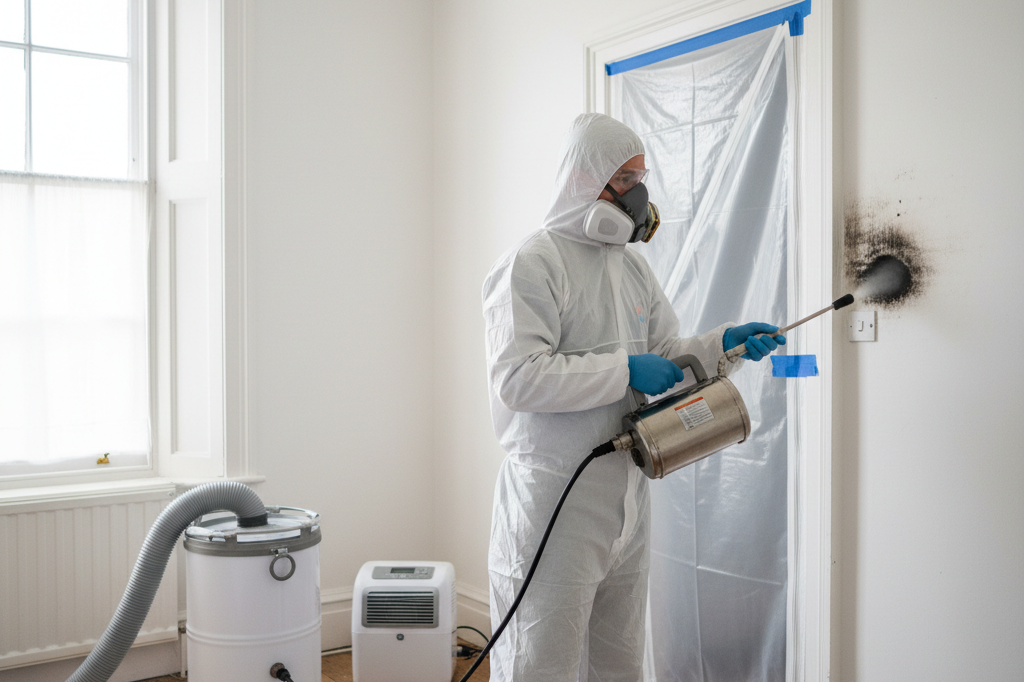
Removing mould the right way
Anyone can wipe a wall. Doing it so the mould doesn’t come back and doesn’t spread through the house in the process is a different job — and it’s the one worth paying for.
Our remediation follows IICRC S520, the recognised standard for mould work. That means the affected area is contained and put under negative air pressure, the air is filtered through HEPA units throughout, contaminated materials are removed safely, and remaining surfaces are treated with proper biocidal antimicrobials rather than bleach.
A controlled, contained process
We treat your property like the working environment it is for the duration of the job: floors protected, a single area contained at a time, and the rest of the home left livable. Spores are kept inside the containment and captured by the air scrubbers, so the clean parts of the property stay clean.
We tackle the cause at the same time
Remediation that ignores the moisture source is cosmetic. As part of the work we make sure the underlying cause — identified in the mould survey — is dealt with, whether that’s a condensation and ventilation problem or water getting in. That’s what makes the result last.
If a contractor offers to “get rid of the mould” without ever asking where the water is coming from, be cautious — you’re paying for a delay, not a fix.
Common situations we deal with
Spores spread when disturbed
Scrubbing dry mould or bleaching it sends spores airborne across the home. Containment and HEPA extraction stop that happening.
Porous materials hold it
Mould roots into plaster, plasterboard and timber. Wiping the surface leaves the hyphae behind, so it regrows.
Bleach is not a cure
Household bleach mostly removes the colour, not the growth, and adds water. We use proper biocidal antimicrobials.
It's a health risk
Mould exposure aggravates asthma, allergies and chest conditions. Removal should protect the people in the building, not just the wall.
Methodical, contained, evidence-led
The work is done in a controlled sequence — diagnosed, contained, treated and protected — not rushed with a sponge and a tin of paint.
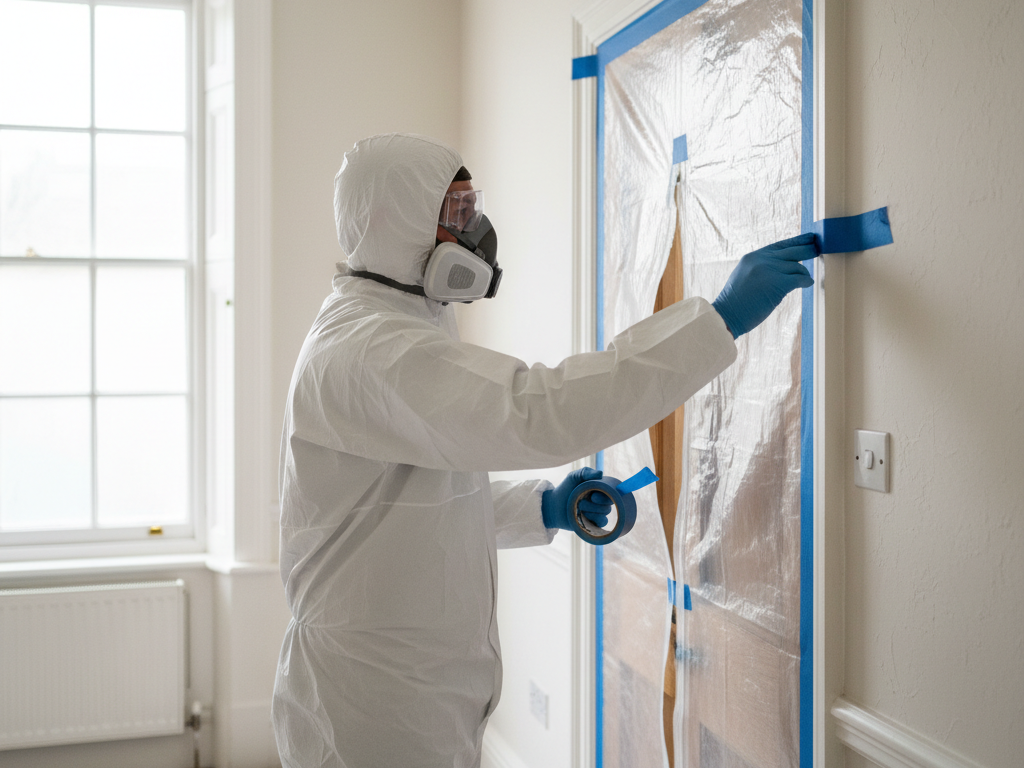
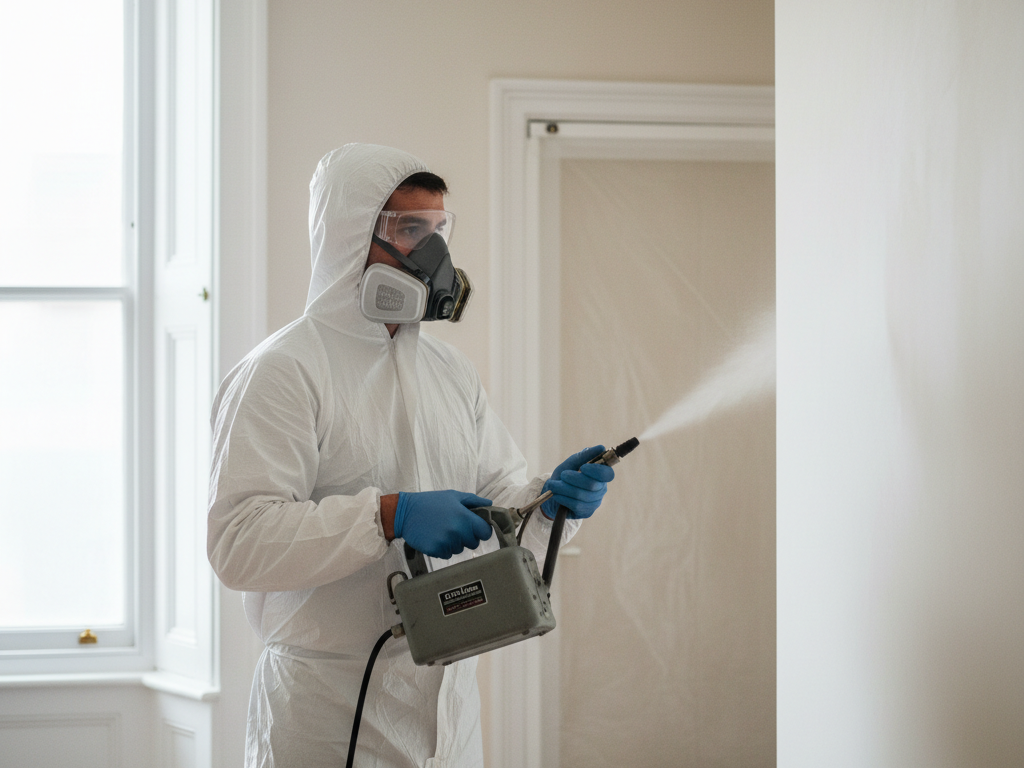
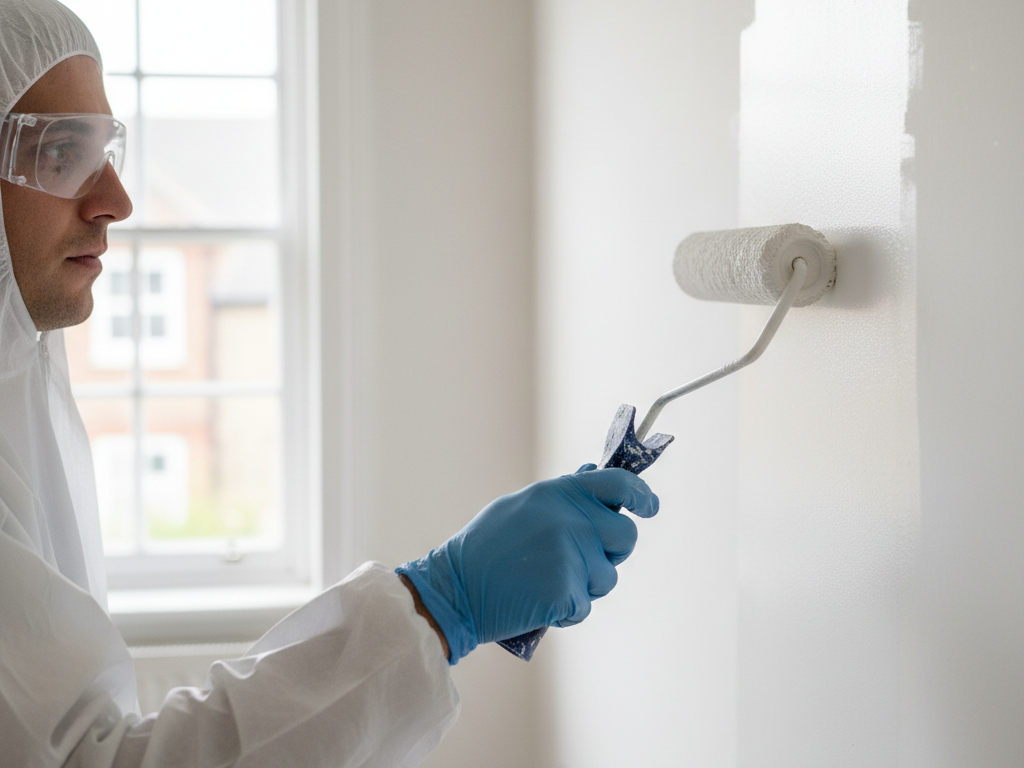
How the work is done
Contain
We seal off the affected area with polythene and zip doors, and run the room under negative pressure so nothing escapes into clean space.
Filter
HEPA air scrubbers continuously capture airborne spores throughout the work, and we HEPA-vacuum surfaces as we go.
Remove & treat
Affected materials are cleaned or carefully removed and bagged, then surfaces are treated with a biocidal antimicrobial to kill remaining growth.
Verify & protect
We clean down, confirm the area is dry and clear, and apply protective measures so the same conditions don't bring it back.
Frequently asked questions
Do you fix the cause as well as remove the mould?
Remediation and cause are handled together. Removing mould without resolving the moisture source — condensation, a leak, poor ventilation — only buys a few months. We identify the cause during the survey and address it as part of the plan.
Is the process disruptive?
Less than people expect. We contain a single room or area at a time, protect your flooring and belongings, and keep the rest of the property usable. Most domestic jobs are completed in one to a few days.
What does IICRC S520 mean?
It's the industry standard for professional mould remediation — covering containment, removal of contaminated materials, HEPA filtration and verification. Following it is the difference between a proper remediation and a paint-over.
Can you treat mould on belongings and soft furnishings?
Hard items can usually be cleaned. Heavily contaminated porous items — some plasterboard, insulation, badly affected soft furnishings — are safer removed and replaced. We'll advise honestly on what's salvageable.
Tell us about the problem
Send a few details and we’ll come back within a working day — with advice, or a date for a free survey. Photographs of the affected areas always help us give you a sense of what’s involved.
- → We find and fix the cause, not just the symptom
- → Safe, contained, IICRC S520 process
- → Across London and the Home Counties
Request a survey
Just the basics — we’ll handle the rest.