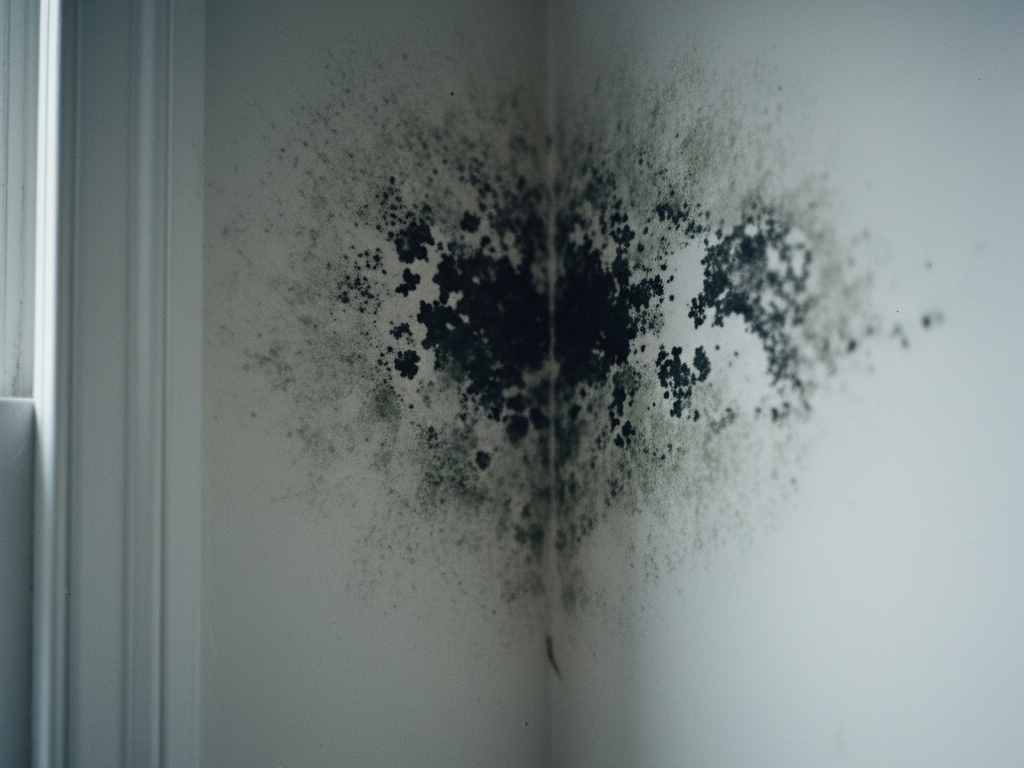
It’s the instinctive reaction: see mould, reach for the bleach. The patch disappears, the wall looks clean, job done. Then a week or two later it’s back in exactly the same spot. There’s a reason for that, and it’s worth understanding.
Bleach removes the colour, not the mould
Mould isn’t just sitting on top of the surface like dust. On porous materials — plaster, plasterboard, timber, grout, sealant — it puts down root-like structures (hyphae) into the material itself. Household bleach is largely water plus a colour-removing agent. It bleaches the visible pigment at the surface, so the black stain fades, but it doesn’t reliably reach or kill the growth underneath.
The result: the wall looks clean, while the living mould is still there, ready to darken again.
Bleach adds the one thing mould loves
Here’s the irony. Mould needs moisture to grow, and household bleach is mostly water. Spray it onto a porous wall and you’ve just delivered moisture to the exact place the mould wants it. You may actually be helping it along.
Disturbing it makes it spread
Scrubbing dry mould — with bleach or anything else — flicks spores into the air, where they settle elsewhere in the home and start new colonies. This is why professional remediation contains the area and runs HEPA air filtration before anything is disturbed.
What actually works
- A proper product — a biocidal antimicrobial designed to kill mould, not a colour-remover.
- Removing what can’t be saved — heavily affected porous materials are better replaced than wiped.
- Fixing the moisture — the non-negotiable step. Until the condensation or damp is resolved, anything you do is temporary.
- Improving ventilation — so the conditions that grew it in the first place are gone.
For a small, fresh patch on tile or sealant, a shop-bought mould remover used carefully is fine. But if the mould keeps coming back, that’s the surface telling you the real problem is the moisture behind it — and that’s worth getting assessed rather than bleaching on a loop.