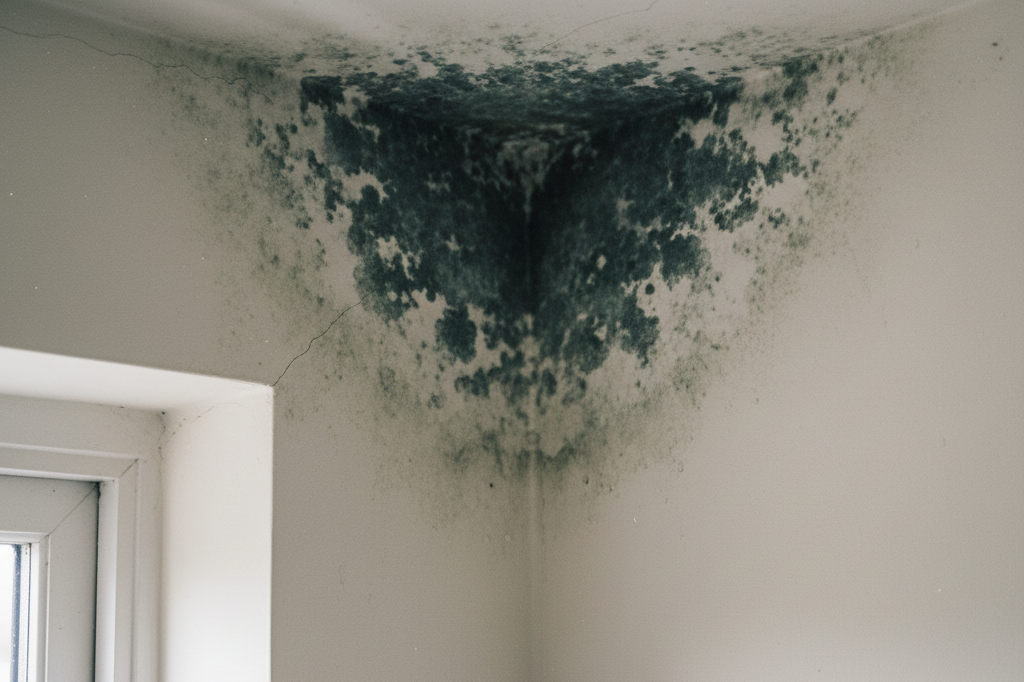
Black mould on a wall almost never appears at random. It grows where a surface stays cold and damp for long enough — which is why you see it in the same predictable places: the corner of a bedroom on an external wall, behind a wardrobe, around a window, or on a bathroom ceiling.
What actually causes it
In the vast majority of London homes, the cause is condensation. Warm, moisture-laden indoor air (from cooking, showering, drying clothes and simply breathing) meets a cold surface, turns back into water, and gives mould the damp film it needs. Older solid-wall properties are especially prone because their walls run cold.
Less often, the moisture comes from penetrating damp (water getting in from outside) or rising damp (ground moisture climbing the wall). These look similar but need different fixes — which is why a proper survey matters.
The health side
The health concerns around black mould are genuine. Exposure is linked to coughing, wheezing, worsened asthma and allergic reactions, and the risk is higher for the very young, the elderly and those with existing respiratory conditions. That’s reason enough not to leave it — but not reason to panic.
How to remove it safely
For a small patch on a hard, non-porous surface (like tile or sealant), you can clean it yourself — wear a mask and gloves, use a proper mould remover rather than bleach, and ventilate the room. But:
- Don’t dry-brush or scrub aggressively — that throws spores into the air.
- Don’t rely on bleach — it mostly removes the colour and adds moisture. Here’s why bleach doesn’t work.
- Don’t just repaint over it — it will come back through the paint.
For anything recurring, widespread, or on porous surfaces like plaster, the safe route is professional black mould treatment: the area is contained, the air is HEPA-filtered, surfaces are treated with biocidal antimicrobials, and badly affected materials are removed rather than wiped.
The bit everyone forgets
Removing the mould is only half the job. Unless you also fix the moisture — usually by improving ventilation and condensation control — it will return to exactly the same spot. Treat the cause, and the wall stays clear for good.